'Treated like a criminal:' Witnesses testify on abuse of Flock cameras
National News

Audio By Carbonatix
6:16 PM on Wednesday, September 23
Thérèse Boudreaux
(The Center Square) – Advocates of the growing network of AI-driven surveillance cameras argue the technology can help make communities across the U.S. safer.
But the controversial cameras have also wreaked havoc on the lives of innocent American citizens, including Florida resident Lindsey Isaacs, who spent 13 days in jail and received severe media attention for a crime she didn’t commit.
Isaacs told her story to U.S. lawmakers during a Wednesday Senate Judiciary Subcommittee on Crime and Counterterrorism hearing, revealing how an image captured and stored by a Flock Safety camera cost her seven months of unmerited hardship.
“I was terrified,” a tearful Isaacs recalled. “I was facing the possibility of spending the rest of my life in prison for a crash that I knew I had not been involved in. I did not know if I would ever get out of jail. At my lowest point, I didn’t want to be alive.”
The Palm Coast resident awoke around 1:45 a.m. on Oct. 5, 2025, to state troopers outside of her apartment and a tow truck confiscating her car.
Police had used images captured by an Automated License Plate Reader camera operated by Flock Safety, she later learned, to misidentify her as the perpetrator of a fatal car accident the day prior.
Despite crash witnesses reporting the perpetrator’s car was a different color than Isaacs’ and despite the lack of damage to her car, police issued a warrant for her arrest on April 17, 2026.
For three days, Isaacs said, she was placed in solitary confinement and dressed in an ill-fitting suicide prevention gown that left her exposed on one side. After spending an additional 24 hours in a mental health unit, Isaacs was transferred to a maximum-security housing unit, where she stayed for 10 days.
While there, she watched her mugshot appear on the news, endured harassment from other inmates, and was denied bond at a pre-trial detention hearing.
Only when her attorney was able to present photos to the judge of her possessed vehicle — which, contrary to the claims of the troopers who possessed it, showed no damage — was Isaacs’ case reevaluated.
She was granted bond after nearly two weeks in jail, and the state declined to prosecute her in May 2026.
“I came here today because I want you to understand that surveillance technology does not exist in a vacuum. Information collected by technology can become part of an investigation that affects a real human being,” Isaacs told the subcommittee.
“In my case, a Flock camera captured my vehicle a few miles from the scene of a terrible crash. That piece of information became part of an investigation that ultimately led to my arrest on three counts of vehicular homicide and 13 days in jail for a crash I had nothing to do with.”
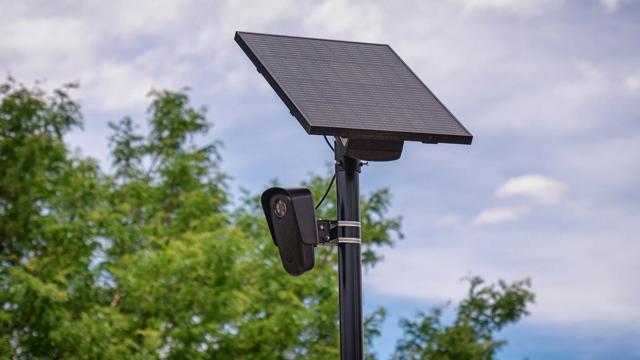
Flock Safety is the largest provider of AI-driven ALPR cameras, operating an estimated 120,000 cameras across 49 states that capture and store within a searchable database over 20 billion images every month.
About 50% of Flock customers are law enforcement agencies, according to figures cited by a Flock representative in July, meaning that U.S. taxpayers are often paying for the very technology surveilling them.
Axon Enterprise, Motorola Solutions, and Verkada are the three other major companies providing ALPR cameras, though data captured by Verkada keeps no external searchable database of the images its cameras capture.
Not one of the CEOs of these four companies appeared before lawmakers at the hearing, despite subcommittee Chairman Josh Hawley, R-Mo., inviting them to attend. The Center Square’s reached out to Flock Safety, Axon Enterprise, and Motorola Solutions for comment but did not receive a response from any.
The hearing spawned out of an investigation subcommittee that Hawley recently launched into the AI surveillance camera networks, which store and catalog images of all passing vehicles, as well as persons around them.
Hawley pointed out users can look up vehicles in Flock’s camera footage database, which analyzes the make, model, color, plate number, location, date, and time of passing vehicles, as well as other identifying markers such as dents and bumper stickers.
They can also search for images of people, Flock Safety CEO Garret Langley explicitly confirmed in his letter to Hawley.
“When you harness all of these things together, you get a capability, based on the reporting, that is different in kind than anything we’ve ever seen in this country,” Hawley said at the hearing.
“The Constitution of the United States is just as valuable and valid and applicable today as it was almost 250 ago when it was first penned, and that includes the right to be innocent until proven guilty — that is, not treated like a criminal and tracked like one.”
Though Flock claims it does not utilize facial recognition technology in its cameras currently, the technology is available and the company has applied for a patent that would permit the tracking of individuals and allow searches of individual persons in its database.
“It sounds as if, based on the reports we’ve heard, it’s treating every citizen in America…as if we are criminals, yet without any due process, without any reasonable suspicion, without any articulable suspicion whatsoever,” Hawley said. “We need to have an honest conversation about where this is leading us as a country.”
Ross Teeple, sheriff of Pinal County, Arizona, also testified before lawmakers. Although ALPR cameras had sometimes helped catch criminals, the department ultimately terminated its contract with Flock after experiencing “just too much disinformation from them and dishonesty.”
“I think it's remarkable that Chairman Hawley got them to admit that they now can track a person, because what I received from a Flock representative was, I was told ‘our cameras don't take a high enough resolution picture to be able to recognize a person,’” Teeple noted.
Teeple believes that relying on private camera networks “as a dragnet” to surveil and log the habits of Americans without a warrant, “we are paving the way to an AI-driven surveillance state.”
“If we allow government-funded private surveillance companies to push this envelope blindly, we risk a sweeping judicial correction that could strip away the legitimate, life-saving aspects of ALPR technology entirely,” Teeple added.